

When I talk to people about my IVF Journey – a lot of people have heard about IVF but people do keep asking me “but what does it actually involve?” So I thought as its something that I keep getting asked then an informative blog post was a good place to start.
So, in simple terms, IVF is when an egg is removed from the woman’s ovaries, fertilised with sperm in the laboratory and then when it becomes an embryo it is returned to the womb to hopefully grow and develop.
But it really is a bit more than that of course!
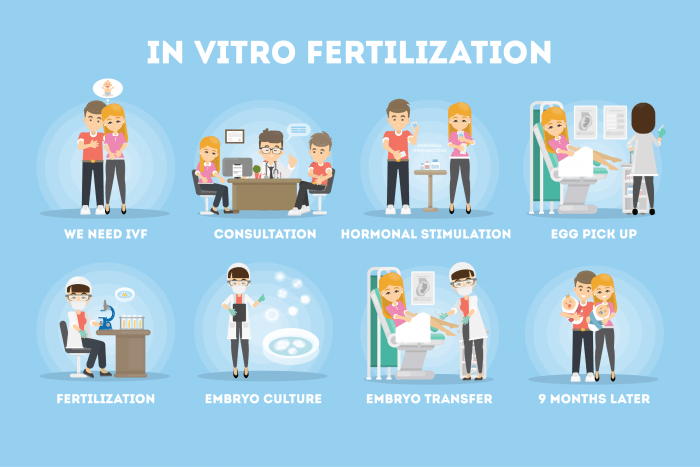
This graphic shows ideally the more simple “plan” of action, with the very hopeful outcome 9 months later. Although its not a given with IVF or any fertility treatment.
For most people, one cycle of IVF will take between four and six weeks and is given in the following steps:
- Suppression Phase – this is when the normal menstrual cycle is suppressd with medication and can be done over 2-4 Weeks. This can be done with “normal” oral contraceptives. This can also be called down-regulation.
- Stimulation Phase – this is when medication (normally injections) is used to allow your ovaries to produce more eggs than usual. This is normally done on Cycle Day (CD) 8-14. This also includes monitoring the progress and will include scans and blood tests every couple of days. The aim is to get your follicles to 17-20mm and the average is 8-15 eggs collected, but can be between 0-50!
- Egg Collection – this is exactly as it sounds. They need to collect the eggs directly from the ovaries. Depending on your monitoring you are told to give yourself a trigger injection – and then egg collection is done within 35-57 hours after! It is done under sedation via a needle through the vagina and a scanning probe. The procedure takes about 30 minutes. But you are unable to be left alone for 24-hours after the procedure.
- Egg Fertilisation – This is when the magic happens. The Egg and Sperm are put into a dish together for them to find each other and fertilise like they would naturally. This is normally done and left overnight. Not all eggs collected will fertilise. Sometimes ICSI will be used instead which is when a single sperm is injected directly into the egg to fertilise it.
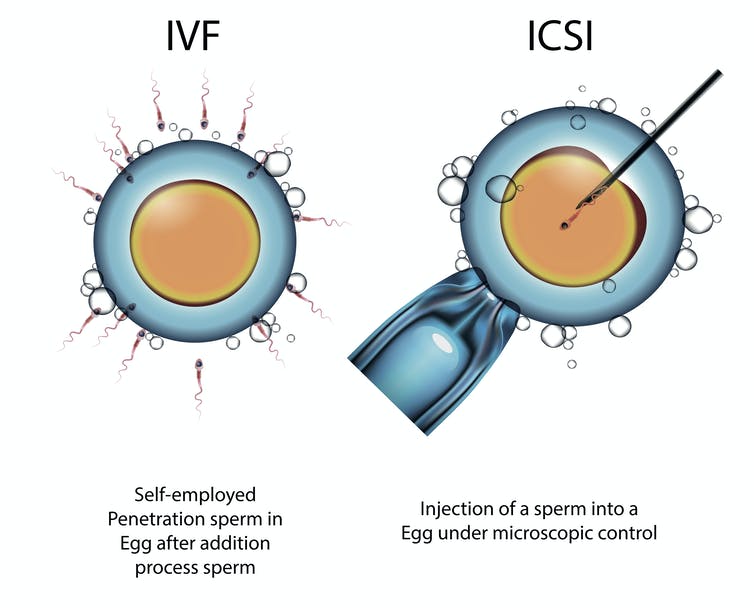
- Embryo Transfer – This is usually done 3-5 days after the egg retrieval and the embryo’s have been developing in the incubator. An Embryo goes through several stages to get to a day 5 Embryo which is referred to as a blastocyst. This is ideally what they like to transfer back to give the best chance of a pregnancy. However, sometimes they’ll do a Day 3 transfer instead depending on the advice of the embryologist. The procedure is done by a catheter into your womb and it’s about a 5 minute procedure.
- Two Week Wait – And now all you are left to do is wait to take that pregnancy test to see whether or not the steps have worked. This is normally when people need a distraction. Some people also class themselves at this time as being “PUPO” or Pregnant Until Proven Otherwise.
I hope you’ve found this informative and it has given you a bit more information about what IVF really is and what I will be going through.
If you have any further questions I’d love to know.


 Solo Mum Overload